Often after men have had radiation or surgery for prostate cancer they experience urine leakage which is commonly known as urinary incontinence (UI). For many men, post-prostatectomy incontinence resolves itself in four to six months after the operation. Fully understanding bladder function and why male UI occurs after prostate cancer treatments is crucial to the fast revival of bladder control.
The bladder's purpose is to receive urine from the kidneys and act as a holding tank until it is full and signals you to urinate. During urination, the muscles surrounding the bladder contract pushing urine out of your bladder and into a tube called the urethra. The muscles around the urethra then relax and allow urine to flow out of your body. In men, the prostate gland surrounds the urethra and as a result, an enlarged prostate and prostate cancer treatment can affect urination.
The most common type of UI in men is stress incontinence or stress urinary incontinence (SUI) and often occurs after a prostatectomy. Stress incontinence is when involuntary leakage or dripping of urine occurs due to inadequate strength of the pelvic floor muscles. Any movements that increase pressure in the abdominal area such as coughing, sneezing, laughing, physical activity, etc. will cause the leakage of small amounts of urine. Prostate surgery can weaken or damage the muscles that surround the bladder and urethra or can damage the nerves that help control bladder function and cause stress incontinence.
After radiation treatment urge incontinence (also known as overactive bladder) can occur. Urge incontinence is when the bladder's muscular wall has a sudden contraction causing an urgency to urinate and an involuntary loss of urine. Sitting, standing or fast movements can trigger urge incontinence. Those with this type of incontinence can experience urine leakage during sleep, after consuming a small amount of water or when they touch or hear water running.
Most men will experience UI of some form after prostate cancer treatments, but doctors have recently developed new ways to reduce the occurrence. Surgeons now have the ability to save more of the muscle surrounding the bladder and the urethra when removing the prostate. Doctors have also grown more accurate, with the help of new computer technology, in using radiation to destroy the prostate while minimizing the effects on the bladder. Both of these developments help patients retain the ability to control their bladder much more quickly after treatment.
Treating and managing UI after prostate cancer can range from at home techniques and post-operative support to medication and surgery. Talk with your doctor to determine which treatment or set of treatments is best for you. Most doctors will encourage you to try bladder training and behavioral techniques before trying devices, surgeries and medication.
Bladder training and behavioral techniques can teach you how to manage your UI and regain pelvic floor strength. They are successful approaches to treating both stress and urge incontinence. Kegel exercises, which involve the repeated squeezing of the muscles you use when stopping urination mid-stream; bathroom schedules, setting specific times to go to the bathroom; and lifestyle modification, the changing of habits to avoid caffeine, alcohol, irritants, drinking less fluids and not drinking before sleep are all a part of reviving bladder control.
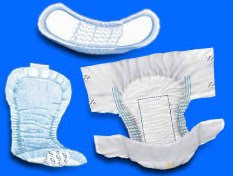
Don't be embarrassed by UI leakage after prostate cancer treatment, learn properly how to manage it to give you the most comfort during the healing process. Talk to your doctor about ways to treat it and about which incontinence products will provide you with proper protection. Discreet delivery programs are available to bring the products directly to your door and save you money.
Monday, February 22, 2010
Experiencing Urine Leakage after Prostate Cancer

Stress Incontinence? Urge Incontinence? You're Not Alone
Incontinence can be embarrassing and tough to discuss, but if you are facing this problem you are not alone. According to the National Association for Incontinence (NAFC), urinary incontinence (UI) affects 200 million people worldwide (1) with 25 million adult Americans experiencing temporary or chronic UI.
UI is most prevalent in women. In fact, research results indicate that one in four women over the age of 18 experience episodes of leaking urine involuntarily (2). Men often experience UI after prostate surgery and in many cases, the incontinence resolves itself in four to six months after the operation. Some may also experience urine leakage during physical activity. Women often experience UI problems caused by menopause, a urinary tract Infection or pregnancy.
Most people generally view incontinence as a normal process of aging. Information on healthy bladder function can help promote the understanding that incontinence is not a disease itself, but is a symptom caused by other problems within your body that are usually treatable (3). According to research, nearly two-thirds of men and women age 30 to 70 have never discussed bladder health with their doctor (2). Understanding the many types of incontinence and why it occurs may help you feel more comfortable talking about and confronting the problem.
Types of Incontinence:
Stress Incontinence
Stress incontinence or stress urinary incontinence (SUI) is when involuntary leakage or dripping of urine occurs due to inadequate strength of the pelvic floor muscles. Any movements that increase pressure in the abdominal area such as coughing, sneezing, laughing, physical activity, etc. will cause the leakage of small amounts of urine. SUI is the most common type of incontinence in men and often occurs after a prostatectomy. SUI occurs in women when physical changes to the abdominal area occur. These changes may result from pregnancy, childbirth and menopause. SUI can also occur during the week before a women's menstrual period because estrogen levels are lowered at this time. This leads to lower muscular pressure around the urethra which increases the chance of urine leakage.
Urge Incontinence or Overactive Bladder
Urge incontinence is when the bladder's muscular wall has a sudden contraction causing an urgency to urinate and an involuntary loss of urine. These contractions can occur because of damage to the bladder's nerves or to the actual muscles. Sitting, standing or fast movements can trigger urge incontinence. Those with this type of incontinence can experience urine leakage during sleep, after consuming a small amount of water or when they touch or hear water running. It is common for women to acquire this as a result of their pregnancy.
Bowel Incontinence
Bowel incontinence or fecal incontinence is the loss of control over your bowels. Common causes include prolonged muscle stretching caused by constipation, muscle damage to the internal and external sphincters, damage to the nerves that control sphincter function, decreased storage capacity caused by scarring on the walls of the rectum, and diarrhea. A weakened pelvic floor may also cause bowel incontinence.
Functional incontinence
Functional incontinence arises when you identify the need to urinate but are unable to make it to a restroom because of limited mobility. Generally you lose large amounts of urine. There are many causes of functional incontinence some of which include poor mobility, depression, dementia, anxiety, low dexterity or any other situation in which it is not possible to reach a bathroom.
Overflow incontinence
Overflow incontinence is the loss of the ability to identify the need to urinate. The bladder never empties and therefore continuously leaks. This type of incontinence is caused from weak bladder muscles, a blocked urethra due to a kidney stone or tumor, or from diseases that affect the autonomic nervous system which can reduce the signals from the bladder. In men, the enlargement of the prostate can restrict the flow of urine and cause overflow incontinence. This form of incontinence is rare in women but can be caused by fibroid or ovarian tumors or from a twist in the urethra. An early warning sign is a slow or timid stream of urine during voluntary urination.
Transient incontinence
Transient incontinence is temporary incontinence caused by certain medications, limited mobility, mental disability, urinary tract infections, and severe constipation, which can pinch the urinary tract closed and block urine flow. If urine leakage still occurs after all temporary causes of incontinence have been dealt with, the condition becomes established incontinence.
Incontinence can make you feel humiliated and alone, but self-treating incontinence is not the most effective way to manage the problem. Do not be afraid to talk to others about your concerns and don't hesitate to make an appointment to see your doctor to address these issues.
(1) Vulker, R. International Group Seeks to Dispel Incontinence "Taboo", JAMA, 1998, No.11: 951-53.
(2) Muller N. What Americans Understand How they Affected by Bladder Control Problems: Highlights of Recent Nationwide Consumer Research. Urologic Nursing. 2005:25(2): 109-115.
(3) Bell M, DeMarinis M. The psychological cost of incontinence. ECPN. 2006;109:13-14.
Monday, August 25, 2008
Why are there such price differences when it comes to Adult Diapers?
Every diaper manufacturer will use different materials to make up the outside and more importantly, inside of the diaper. It would make sense that less expensive diapers are made with less expensive materials. This is one area where cheaper is not better. You don't have to pay an arm and a leg but here are the benefits that are experienced with a higher priced diaper product, really a higher quality diaper product. They are drier and more comfortable, no leaks; they are made with cloth like breathable material for your skin protection; they are made with absorbency indicators on the outside of the diaper, so as to not mistake when it is time to change; and, they are built with odor reducers for more confidence and security. When it comes to Bladder control, you want the tools you need to feel as you normally feel.
Where can I order my Adult Diapers with discrete shipping?
You can order them online at www.binsons.com or contact one of our customer service representatives at (888)-246-7667.
To the best of our knowledge, the information contained herein is accurate. However, neither Binson's, or any of its subsidiaries assumes any liability whatsoever for the accuracy or completeness of the information contained herein. This information is for educational purposes only.
Thursday, July 3, 2008
HOME DELIVERY
Now Available to you at your door! You can get discrete HOME DELIVERY for all of your diaper and incontinence needs at a GREAT discount by calling 1-888-BINSONS or 1-888-246-7667 or online at www.binsons.com . Call now to find out how to save 32% off of the retail price for adult diapers and to order a FREE SAMPLE!!
To the best of our knowledge, the information contained herein is accurate. However, neither Binson's, or any of its subsidiaries assumes any liability whatsoever for the accuracy or completeness of the information contained herein. This information is for educational purposes only.